AI automations & business systems in AustinLess chasing. Better handoffs.
The short answer
Connected tools, internal systems and AI-assisted workflows built around the way a business actually operates. We look for repeatable work, define the rules and keep people in charge of consequential decisions.
PHASEKIND builds AI automations and connected business systems for small and mid-sized businesses, around how the company already works: lead intake and follow-up, document and information systems, and AI-assisted drafting or classification. Each workflow is mapped first, uses fixed rules where rules work, and keeps a person reviewing consequential decisions. It suits a business moving information between inboxes, spreadsheets, storefronts and internal tools, and losing time or context at each handoff. Before choosing a model or tool, we define the trigger, the owner, the failure path and the outcome the workflow should improve, so the system explains what happened when something goes wrong. Examples are the technical document library we built for Alliance Chemical, organized around products, identifiers and real buying tasks, and Alliance’s supervised AI sales agent, which drafts quotes and emails for a person to approve.
Alliance / Information people can use
The technical library organizes product documents and lot records. Alongside it runs a supervised AI sales agent: from August 3 to September 30, 2026, it sent 1,811 emails and created 161 orders and 129 invoices, with a person approving what it sends.
Explore the work ↗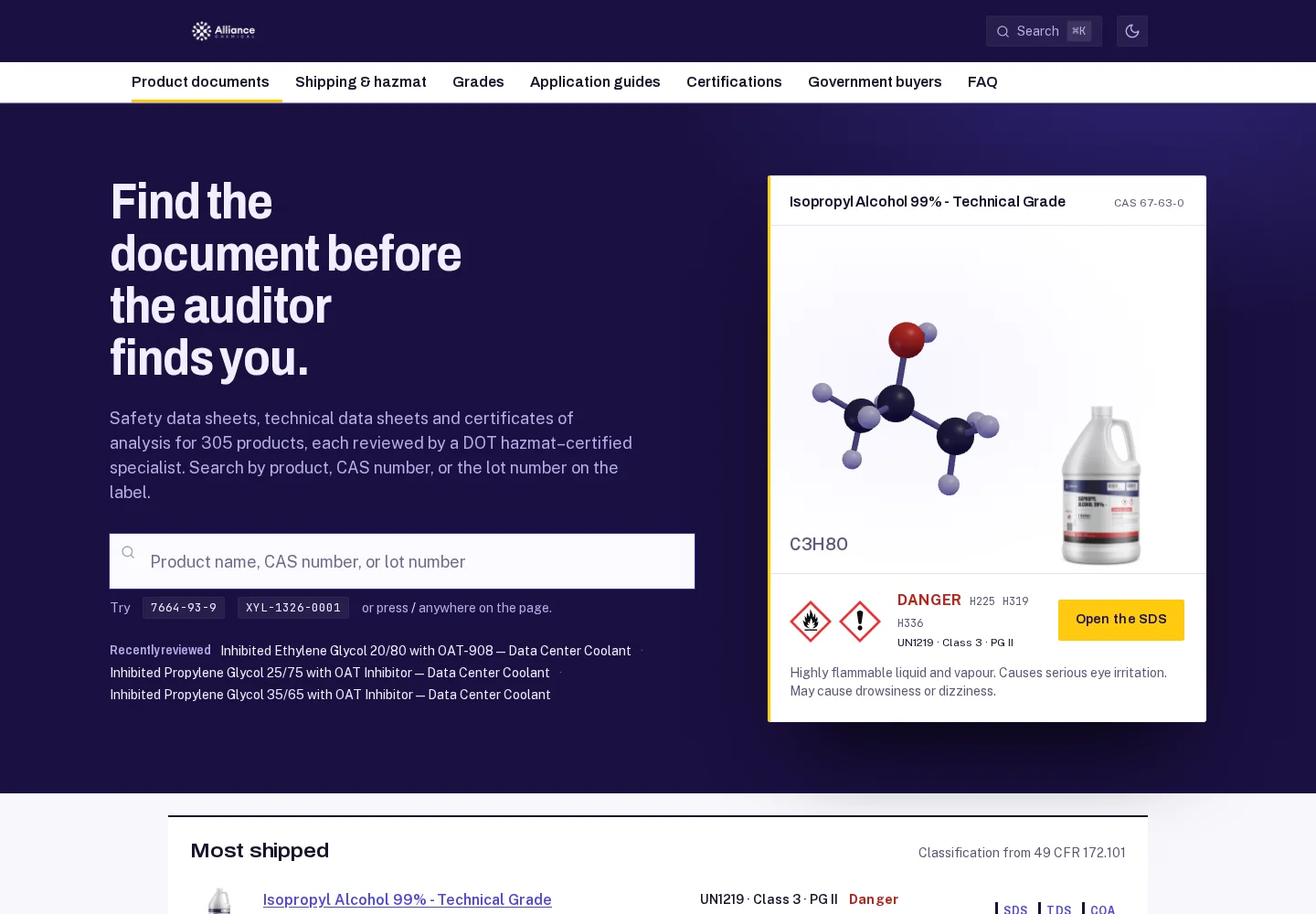
For businesses moving information between inboxes, spreadsheets, storefronts and internal tools—and losing time or context at each handoff.
What we can make
- Workflow mapping & integration planning
- Lead intake and follow-up workflows
- Document and information systems
- AI-assisted drafting or classification
- Review steps, failure handling & handover
Start with the workflow. Choose the tool afterward.
Map the real process
Identify the trigger, source information, responsible person and expected result. Exceptions matter as much as the happy path.
Use rules where rules work
Structured records and deterministic integrations often solve the problem. AI is useful when language needs interpretation, classification or a first draft.
Make the handoff visible
Define when somebody reviews an output, how a failed step is handled and where the record of the work lives. The system needs to be understandable after launch.
A few practical questions.
Does every automation need AI?
No. Fixed rules, structured data and standard integrations are often simpler and more reliable. We use AI where the task benefits from it.
Can you work with our existing tools?
We start by checking their APIs, access controls and data structure. Feasibility depends on what those tools allow and how reliable the source information is.
Will the system act without review?
That depends on the action and its consequences. We define review points, permissions and failure paths before implementation.
Tell us where
you want to take it.