A document library starts with the question someone needs answered.
What the Alliance Chemical library shows about organizing technical information around products, identifiers and real buying tasks.
Key points
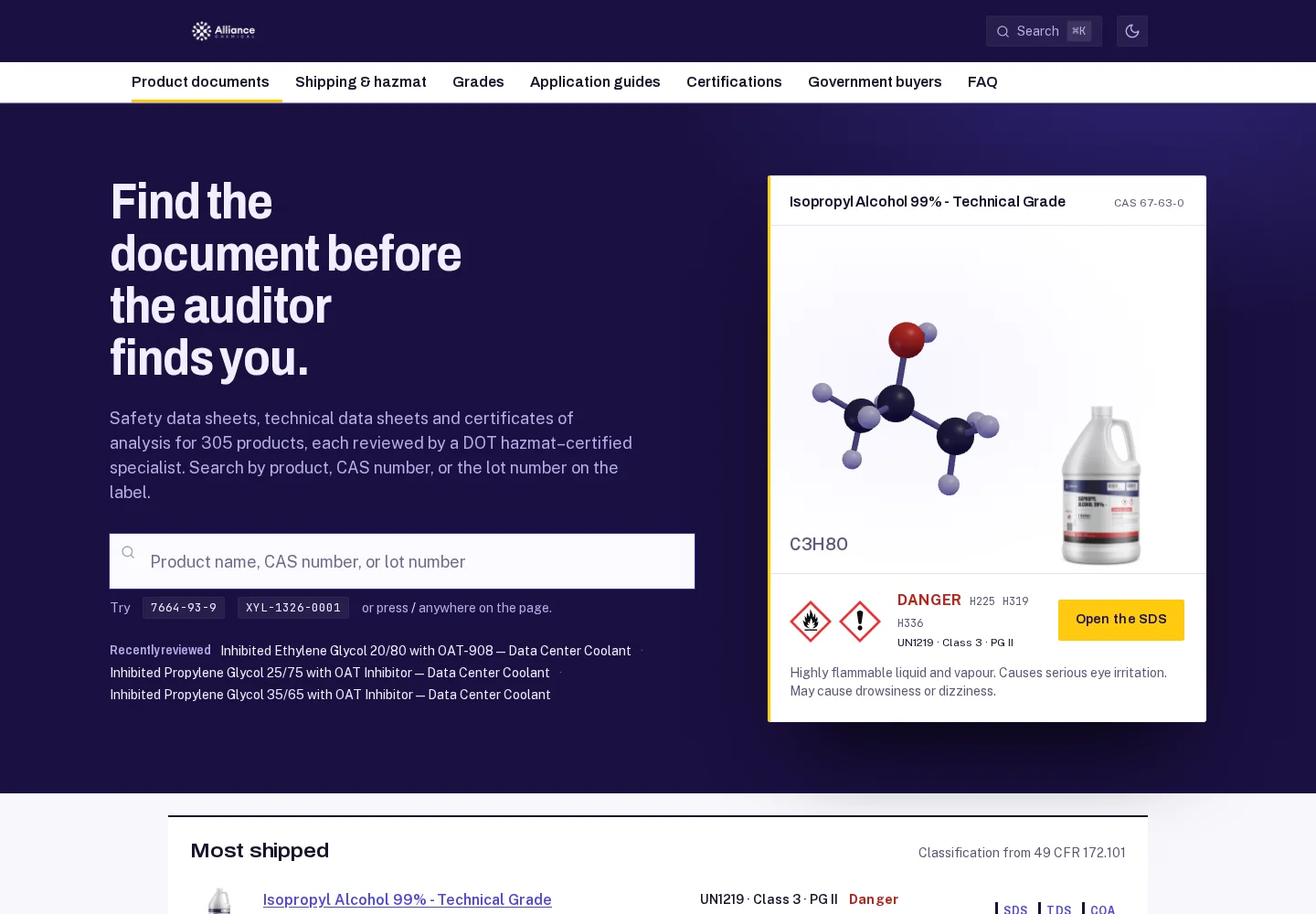
- A technical document library should accept the identifier a buyer already has: a product name, a CAS number or a lot number.
- Safety data sheets, technical data sheets and certificates of analysis answer different questions, so each needs its own place in the product record.
- On a reference page, search is the main task, with browse routes for people who don’t know the exact product yet.
- We built docs.alliancechemical.com this way. We have no measured support-ticket reduction, so we don’t claim one.
A buyer arrives with different information
Someone researching a chemical may have a product name. A purchasing team may have a CAS number. A person holding a container may only have its lot number. A useful library accepts those starting points instead of making everybody learn its filing system.
We built docs.alliancechemical.com with those entry points in mind. Product information and document access sit together, while lot records provide a route from a physical label back into the library.
Different documents answer different questions
A safety data sheet, a technical data sheet and a certificate of analysis serve different purposes. Giving each a clear place within the product record helps visitors choose the right document rather than browse an undifferentiated list of files.
The library also connects product information with grade comparisons and application guides. Those are adjacent questions a visitor may need to resolve before choosing what to buy.
Search is part of the interface, not an extra
The search field is prominent because retrieval is the central task. The page also provides browse routes for people who do not yet know the exact product. Direct lookup and exploration need to coexist.
This is a useful distinction for any technical business: the homepage may introduce the company, but a reference page must help somebody complete a task quickly.
The website includes the work after the sale
A storefront is only one part of a buyer’s experience. Specifications, document access and the information attached to a product can matter before and after checkout. Treating that information as part of the design gives the business a more useful digital presence.
This project demonstrates information architecture and connected systems. We do not have a measured support-ticket reduction to attribute to the library, so we do not claim one.
Questions people ask
How should a chemical company organize its SDS and COA documents?
Inside the product record, with a clear place for each document type, and searchable by product name, CAS number and lot number, so buyers don’t have to learn the company’s filing system.
Why does a lot number matter on a website?
A person holding a container may only have its lot number. A lot record gives them a route from the physical label back to the right certificate and product information.
Should a technical library be search-first or browse-first?
Both. Search is the central task, so it should be prominent, but browse routes help people who don’t yet know the exact product.